

Across 150 minutes, Marty Supreme charts a whirlwind nine months in the life of a table tennis wunderkind and New York City scammer, as he grows increasingly soulless in pursuit of his dream to be a ping pong champion, leaving behind wreckage both physical (like a burned down Jersey gas station), but mostly emotional—chiefly Rachel, the childhood friend carrying a child that Marty refuses to claim.
Ultimately, Marty fails. After two hours of scheming, conning and smooth-talking, he finesses his way to a tournament in Japan only to discover that his sport has moved on without him. The closest he can come to glory and reclaiming his pride is by defeating his nemesis in an exhibition match whose reach will never extend further than its modest audience. He’s a footnote—scoring a thrilling victory in a match that will never matter, or even be fondly remembered, to anyone but him.
To anyone well-versed in Safdie cinema, that Marty even makes it out of Japan alive is a victory, since winning the match was an act of defiance towards Rockwell, the captain of industry Marty gets indebted to. I half-expected a Rockwell goon to put a .38 shell between Marty’s glasses for his insolence. Instead Marty makes it all the way back to the New York hospital where Rachel is recovering from an actual bullet wound. He’s unusually warm to her, refers to himself to hospital staff as “the father,” and upon gazing at his newborn son, bursts into tears.
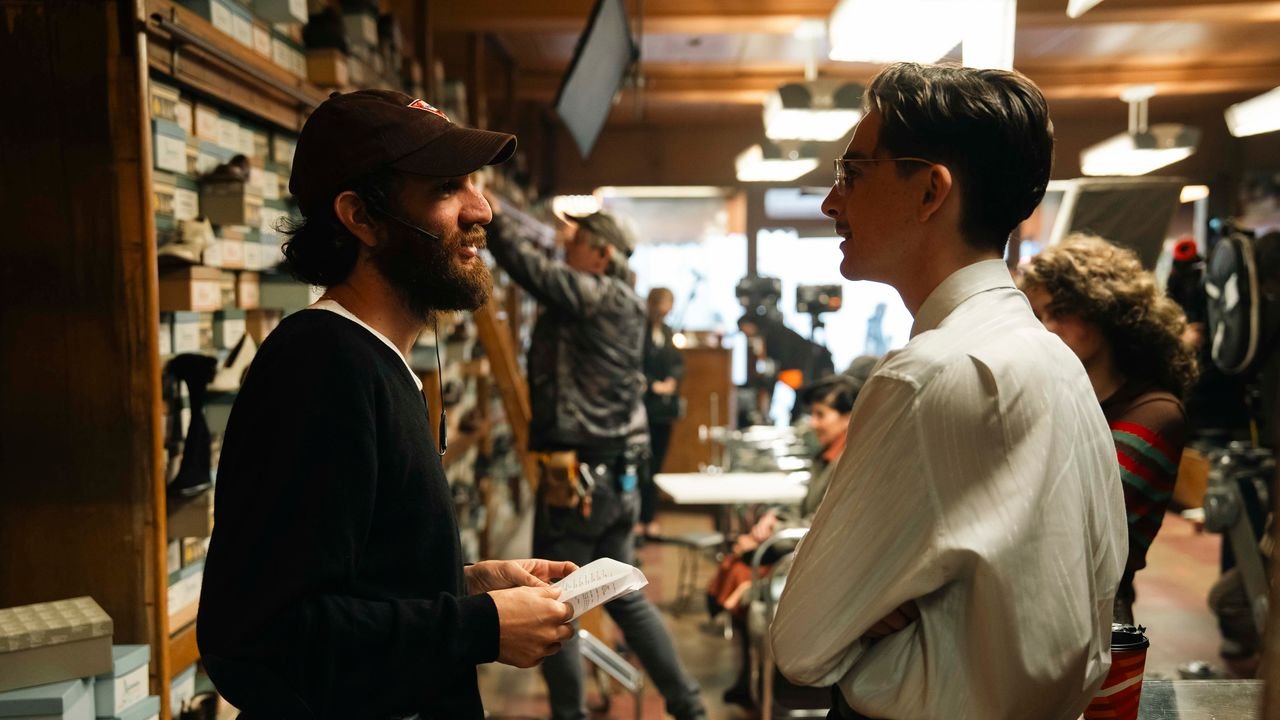
Is this a “happy” ending? Howie Ratner and Connie Nikas would say so. It certainly lets Marty off the hook for a lot of the grief he caused—but it also felt to me like a prison and/or death of a different sort. The goal that Marty based his entire identity around is officially unobtainable. The dream is dead; reality is here and responsibility is staring at him in the face. He will probably go take over his uncle’s shoe shop, a fate he runs from the cops to avoid earlier in the film. He’ll probably be pretty good at it, while being forced to wonder what if for the rest of his life.
When I spoke with Marty Supreme cowriter/director Josh Safdie before the film’s official release, I asked about the ending specifically, and what it revealed about the cowriter/director’s intentions regarding themes of anxiety about fatherhood and maturity.